
Our first meeting of the year started with a talk and demonstration by Neil Hutchings on thread-grafting. This allows branches to be added to desired positions on the tree using a donor branch grown to a suitably long length from either another branch on the tree, or a branch from another tree of the same species. The basic technique involves drilling a hole through the trunk with a diameter that is slightly larger than the donor branch, which minimises the time it takes for the graft to take. It is useful to drill the hole from the side where the branch will exit the trunk. This ensures the branch angle is correct. The branch is then threaded through the hole, taking care to avoid damaging any buds. Wire can be used on the graft branch if required to prevent it from moving out of position.
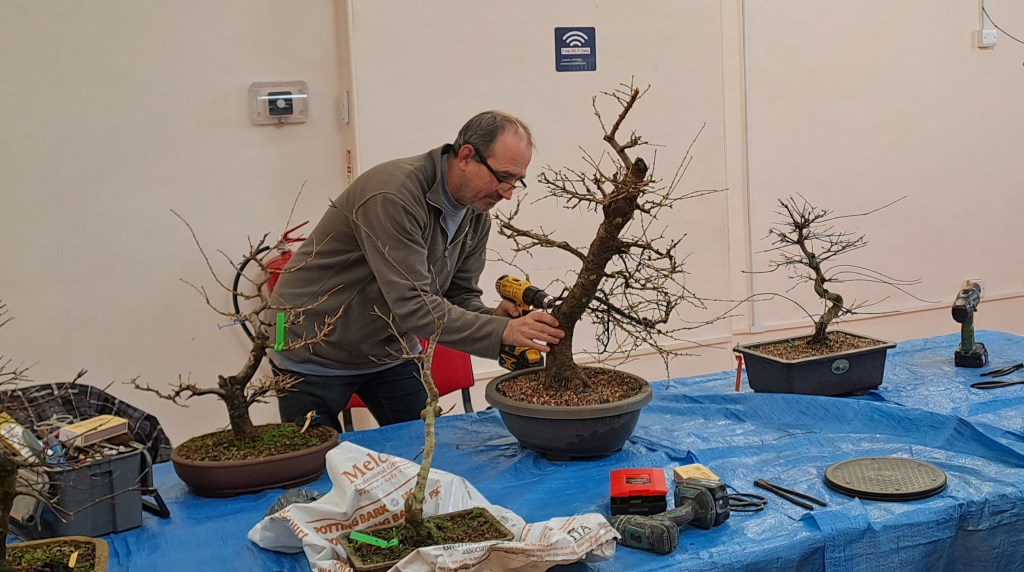
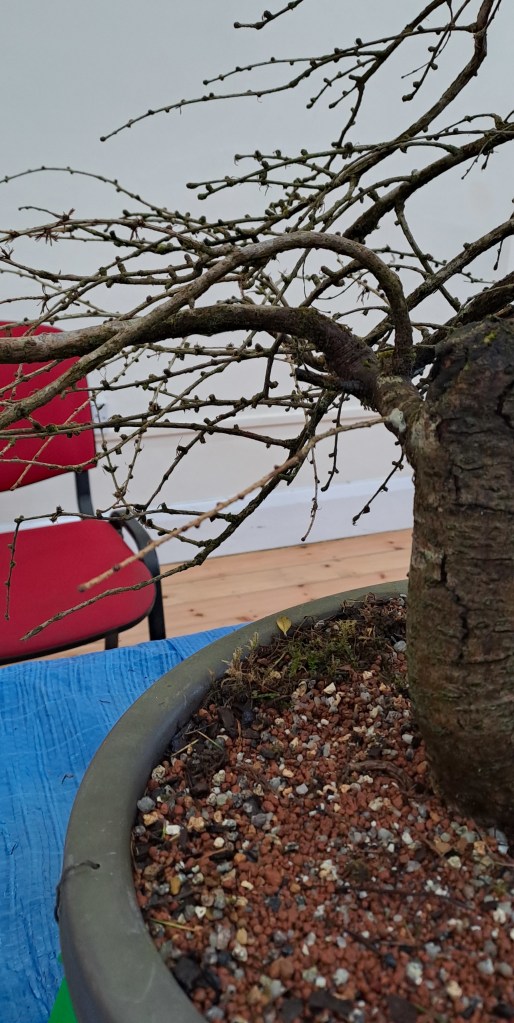
The entry and exit side of the graft is then secured using a small wedge of wood cut from a matchstick for example. Both sides are then sealed with liquid wound sealant to prevent moisture getting in or out and the tree is then left to grow. Success of the graft can be identified when the growth on the exit side of the branch is thicker than the entry side, this typically takes around six months to a year. The donor branch can typically be removed after 1.5 to 2 years after grafting. Thread grafting can also be used to create more compact trees by threading a new leader onto an overly straight or untapered trunk line. Thread grafting can be applied to most deciduous species either prior to the growing season or mid season following defoliation.
Many thanks to Neil for the interesting talk and demonstration.
 Exeter Bonsai Society